Artist feature · 9 October 2026
Omar Medina
Composing the conditions
The Mexican composer’s electronic systems leave room for uncertainty. His story gives that uncertainty a shape.
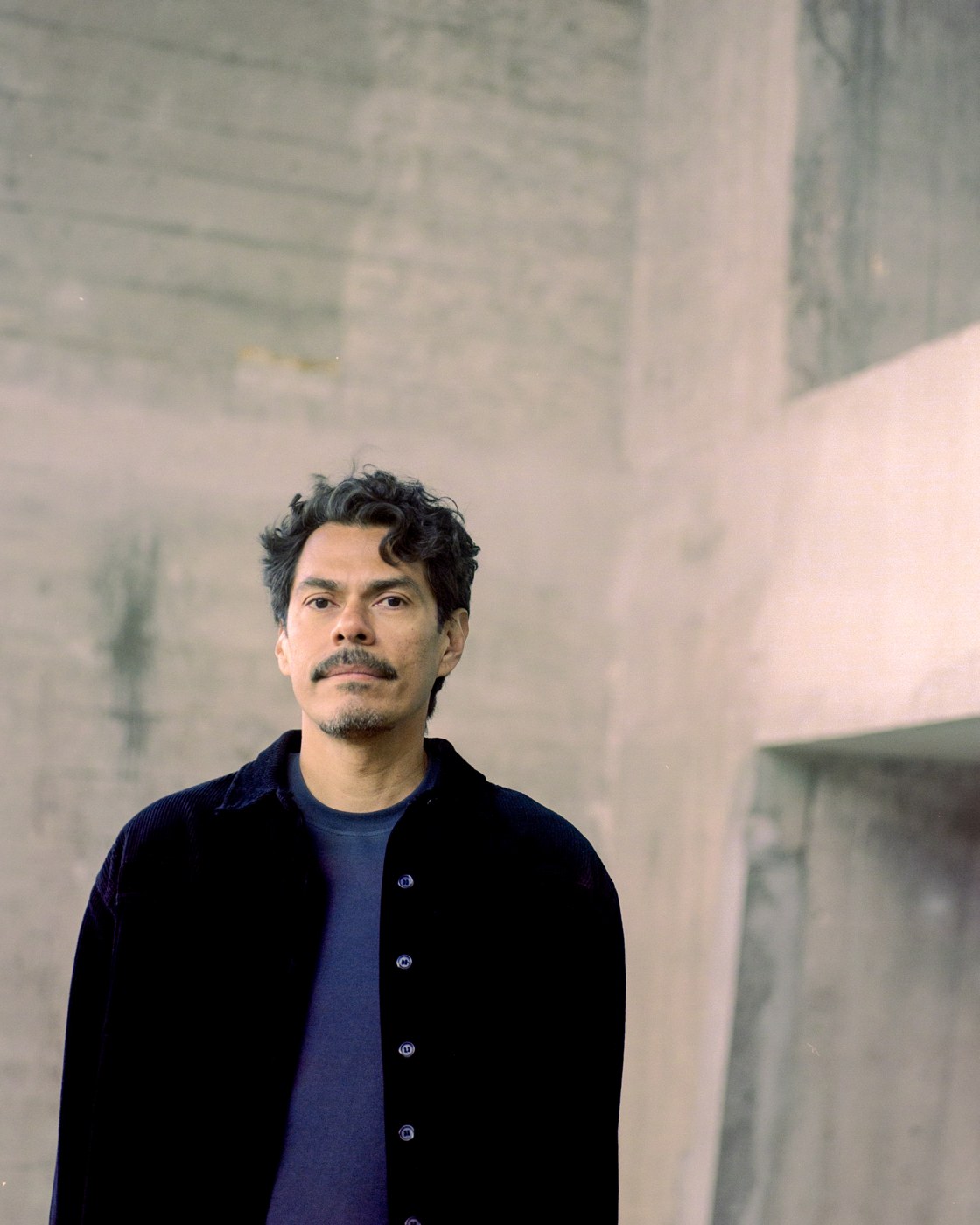
What gives electronic music a sense of narrative? A voice can tell a story, but so can the decision to hold a sound in place, interrupt it or let it change beyond recognition. Omar Medina’s practice invites that second kind of attention: to sound as an unfolding experience, with pacing and tension carrying the meaning.
The Amsterdam-based composer, producer and guitarist is originally from Mexico. Kunstinstituut Melly’s biography places Mexican folk music, free improvisation and contemporary pop alongside his work in theatre and cabaret. It describes his approach as sound-shaped-dramaturgy
. That is a useful way into his work: the relationships between sounds matter as much as their individual character. [1]
A musician’s sense of time
Medina studied music in Mexico City before completing a master’s in Live Electronics at the Conservatorium van Amsterdam. His theatre experience offers context for his interest in sonic stories. In a stage production, a sound acquires meaning through its entrance, duration and relationship to what surrounds it. Read through that lens, electronic composition becomes an art of arranging encounters. This is our interpretation of the background described by Melly, rather than a claim about a particular track. [1]
His own account connects improvisation with jazz and traditional Mexican music. He also continues to perform Mexican repertoire through La Fandanguera. Those traditions remain part of an active musical life; they need not appear as recognisable folk quotations in every electronic piece. [2]
Building something to respond to
Medina’s official biography describes custom Max/MSP systems working alongside modular synthesis and processed field recordings. He welcomes unpredictable events into the process, then responds as a performer. The human contribution includes deciding what the system can do and how to react when it does something unexpected. [2]
OT301’s performance biography supplies an earlier view of that vocabulary: error, chance and repetition recur through algorithms and recordings, with digitally generated beats among the materials. Its Unknown Electronics listing also establishes a live context—the series presents exclusively live sets. It does not establish his exact equipment or the structure of a particular performance. [3]
GOLEB: a place becomes a state
Released on 24 September 2026, GOLEB gathers five compositions made between 2021 and 2023. Medina’s album notes describe independently conceived pieces that revealed common concerns when brought together: movement, adaptation and resistance to change. Each track had its own Max/MSP generative system, shaped through improvisation with modular synthesizers, recordings, samples and electronic instruments. [4]
The title comes from an Amsterdam artists’ building where he briefly lived after moving to the Netherlands. In his account, the name gradually became an expression of transition. That gives the album’s computational methods a personal setting: systems capable of change become a way to think through changing circumstances. [4]
His artist statement connects relocation with the adjustment to increasingly digital life. Both require learning how to act within unfamiliar structures. For Wired Moth, this is the compelling thread: musical choices that give an abstract process a human context. [2]
Sources & further reading
This profile draws on published artist statements and institutional biographies. No interview was conducted for this feature.