A new music site for artists working at the intersection between art and technology.
Wired Moth is dedicated to the strongest new music being made with code, custom software, machine learning, live systems and other unusual technologies. We cover pop, club music, composition, sound art and everything in between.
The music always comes first. We are interested in technology when an artist uses it to make new creative choices: building an instrument, writing a set of rules, training a model on their own material, performing code or turning data into musical form.
The site is updated regularly. Fresh Signals gathers the newest releases, while the 2026 archive reaches back to January and will feed our end-of-year selection.
We welcome any feedback regarding the site and the music we are showcasing. We encourage you to support the artists and labels who are releasing the music by purchasing music on Qobuz and Bandcamp or streaming where available.
Latest feature
Latest feature · 9 October 2026
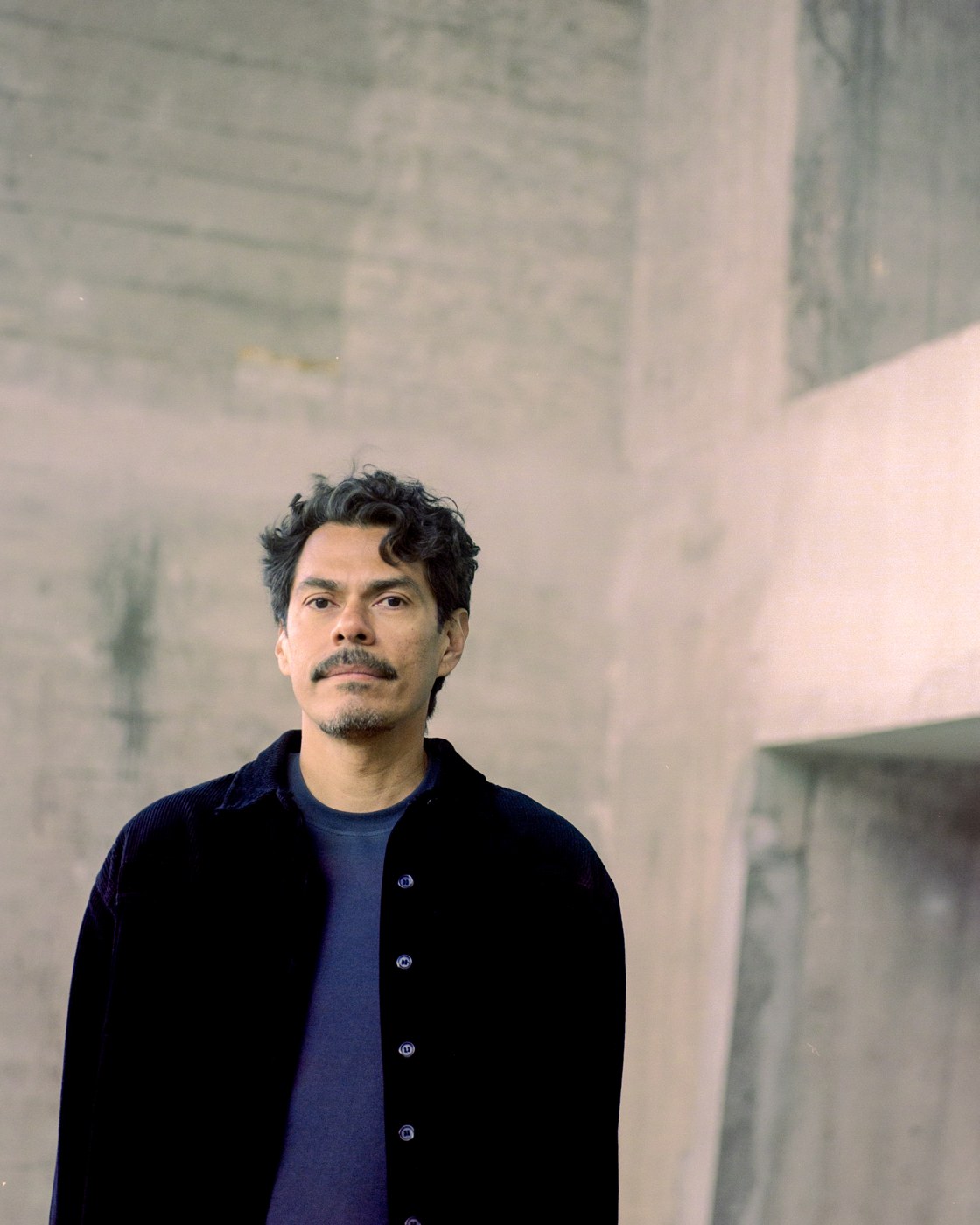
Omar Medina
Composing the conditions
The Mexican composer’s electronic systems leave room for uncertainty. His story gives that uncertainty a shape.
Migration, improvisation and sonic storytelling. Inside Medina’s approach to generative systems—and the personal history behind GOLEB.
Artist featureMax/MSP · Modular synthesis9 October 2026
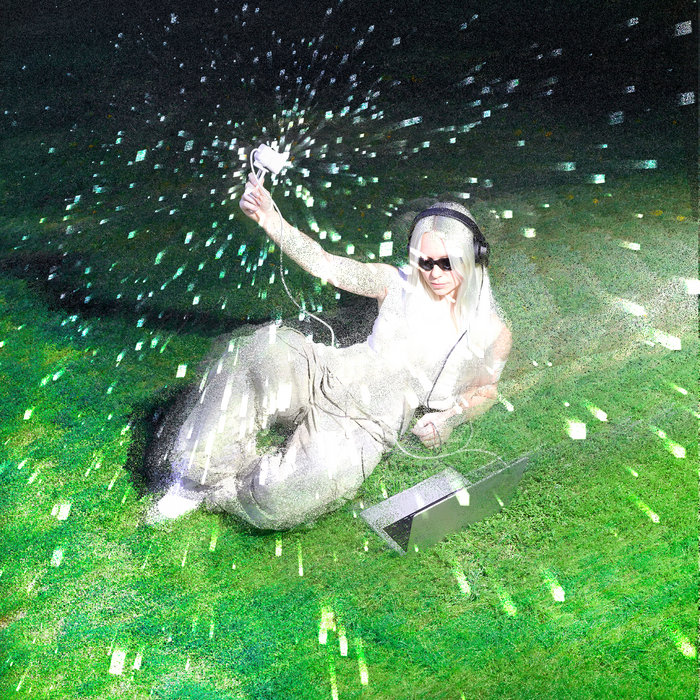
A three-minute club track made by writing and performing code in Strudel. Its directness says more about DJ_Dave’s practice than a technical demonstration ever could.
DJ_Dave has built her live identity around disclosure: the audience sees the code as she writes it. A mistyped character can change the music; a working line can be pushed, rearranged or abandoned. The screen shows the labour, taste and risk that a finished electronic track usually hides.
“Await” was released by Mad Decent on 4 September. DJ_Dave identifies it as coded in Strudel, while interviews describe how she uses Strudel and Sonic Pi to control samples and synthesis, including vocal chops and arpeggios.
The track is structured as pop rather than a software demonstration. A recurring vocal fragment supplies the hook, the tension builds quickly and the song ends before the idea loses force. The code is central to how it moves, but the judgement is a songwriter’s.
Mad DecentSingleLive coding · Strudel4 September 2026
Newly released music that has earned its place here. The window covers 90 days; older selections remain in the 2026 archive.
Radar activeLast scan 28 Oct 2026 · 20:09 GMT · catalogue scan35 releases in the fresh windowEvery six hours
Take a closer listen. Choose Listen here to play an official preview or open a release’s Bandcamp or YouTube player without leaving Wired Moth.
01≤ 90 days
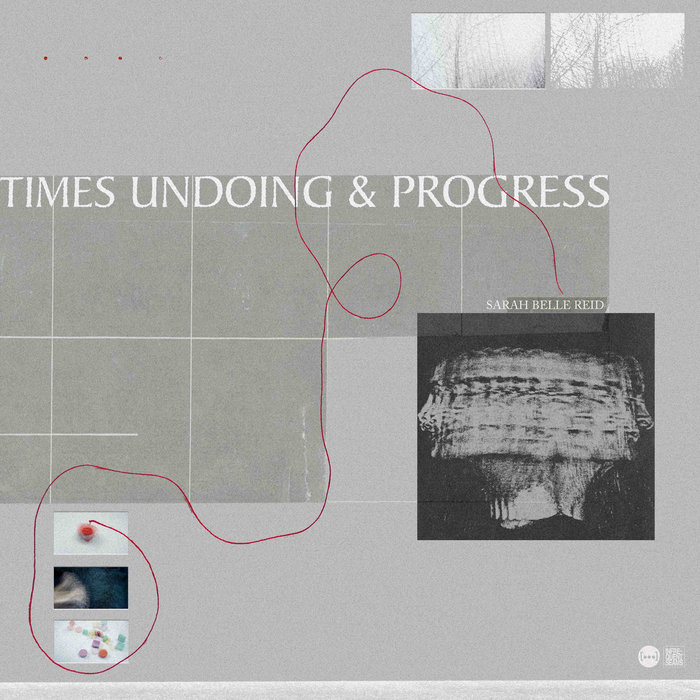
Sarah Belle ReidSelf-released · 20 Nov 2026
Generative softwareNo AI / ML claimed
Times Undoing & Progress
A chamber opera built from memory behaving badly. Trumpet, voices and ensemble writing are sampled, fractured and folded back into themselves until acoustic detail and electronic afterimage become hard to separate.
How the machine enters
Reid and her collaborators developed the work across five years using interactive electronics in Max/MSP. Recordings were repeatedly broken apart, sampled, reshaped and returned to the composition, with Reid directing the iterative form and Ryan Gaston credited for programming. No machine-learning claim is made.
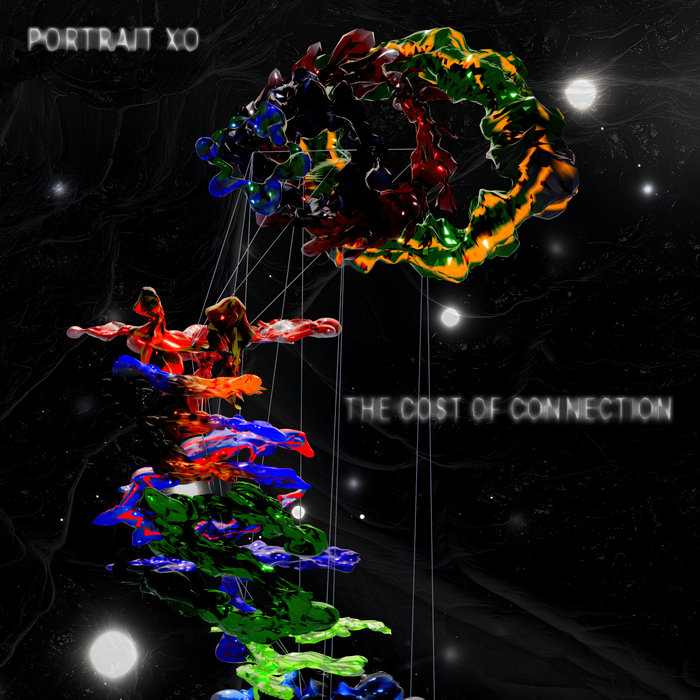
Data activism becomes vivid electronic composition rather than a dashboard with a soundtrack. Climate, inequality and social metrics move through dense synthetic colour, while one human producer keeps the album's argument, pacing and emotional weight in view.
How the machine enters
Portrait XO sonifies data from Our World in Data tied to the UN's Sustainable Development Goals, then combines it with sounds made through consent-based models of her own work and material from WOULG and Rob Clouth via Neutone AI and Datamind Audio. She composed, recorded, produced and mixed the album; the models are credited instruments inside a human-authored work.
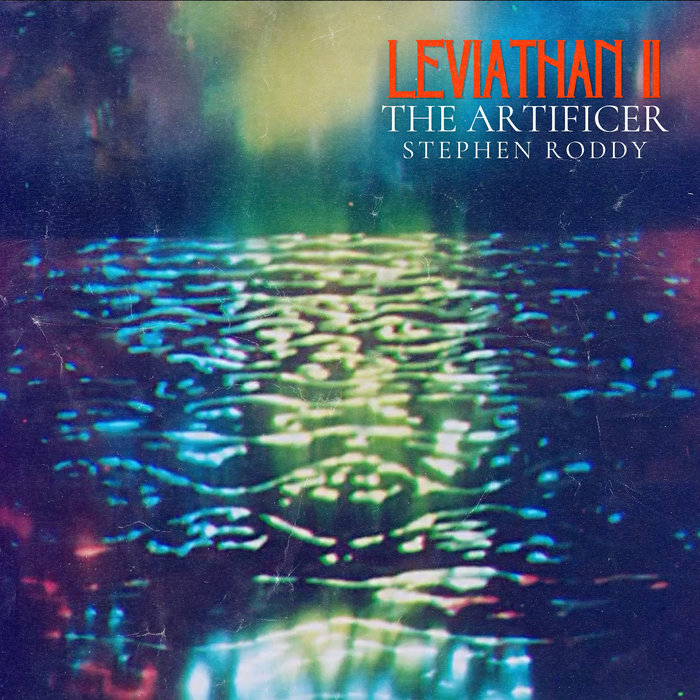
A sixty-three-minute sequel whose dark ambient mass keeps revealing moving parts: coded percussion, granular guitar and dense electronic weather arranged with the patience of long-form composition rather than the passivity of a system left running.
How the machine enters
Roddy uses TidalCycles compositionally, controls granular and effects chains from guitar, and deploys generative systems he designed in Max/MSP. He wrote and performed the full work, retaining authorship through the systems' construction, instrumental control and arrangement. No machine-learning claim is made.
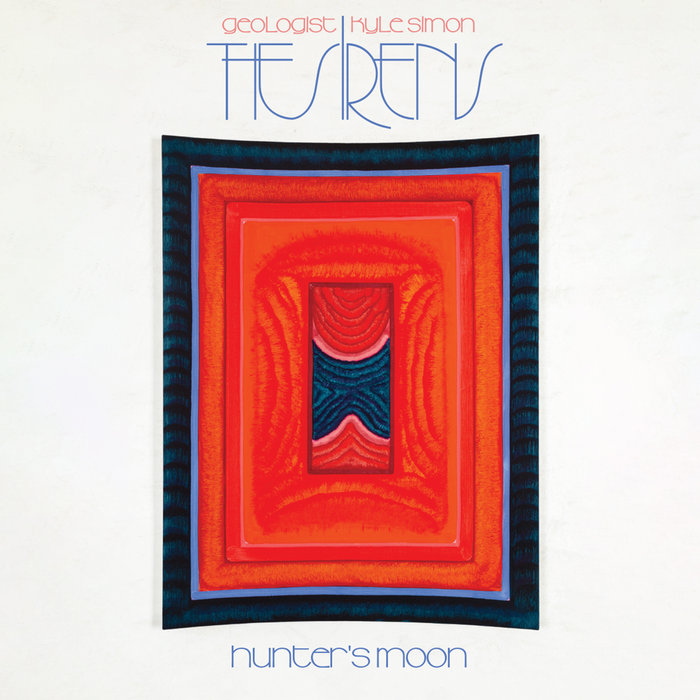
Moonlight becomes control voltage, but the appeal is not the diagram. Across a single slow arc, cracked electronics and luminous drones keep changing density as two performers steer and answer a signal that can never quite repeat.
How the machine enters
Simon steers homemade telescopes fitted with photodiodes and optical sensors. An analog amplifier turns their changing readings of celestial light into control voltage for Geologist's modular synthesizer, modulating pitch, filters and other parameters while Geologist responds in real time. The performers built and direct the system; no machine-learning claim is made.
Brian EnoOpal Records · 16 Oct 2026 reissue · originally 2005
Generative softwareNo AI / ML claimed
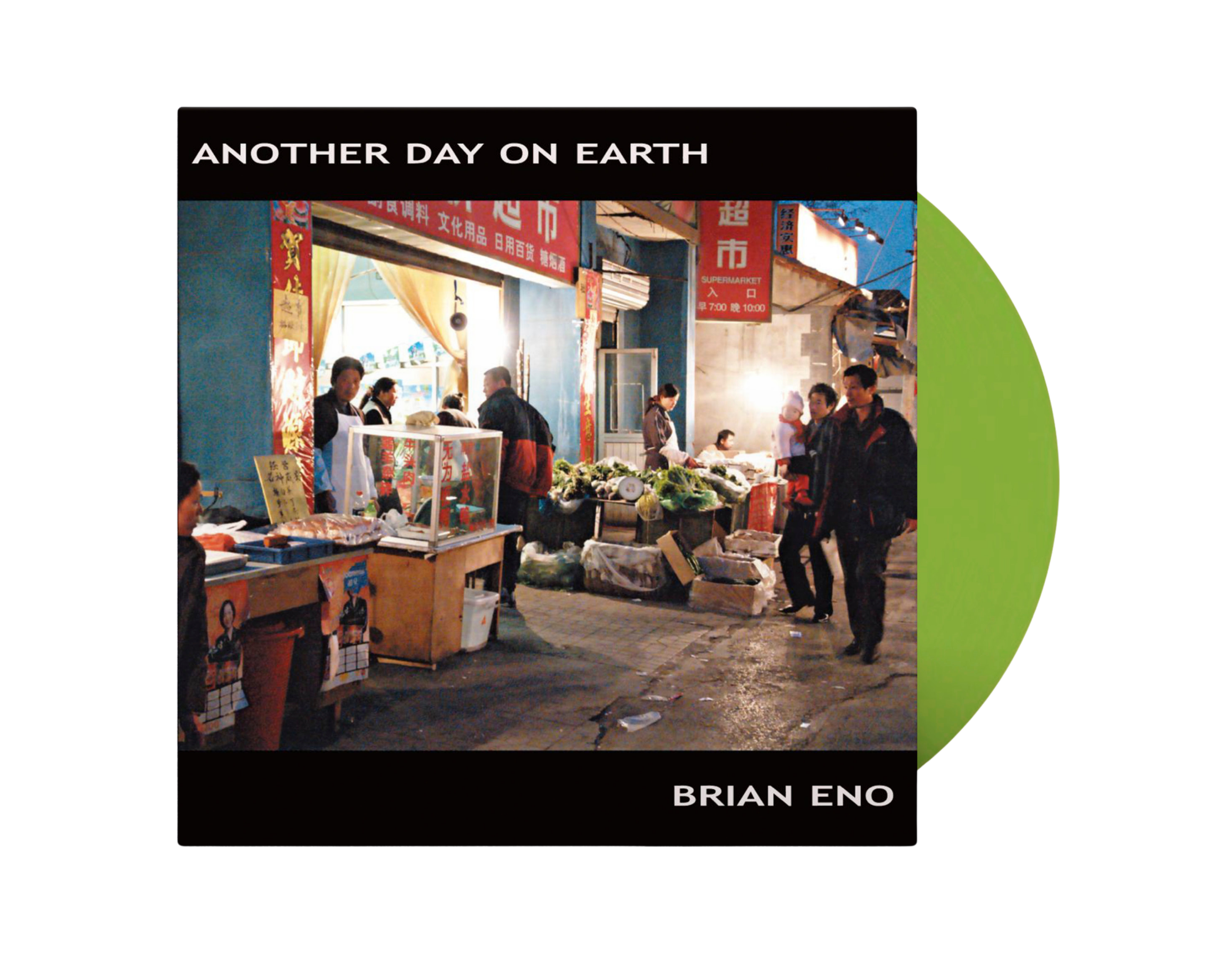
Another Day on Earth
A restored vocal Eno album where songs, treated voices and ambient detail keep exchanging foreground and atmosphere. The generative element is track-specific rather than a claim for the whole record, but its soft instability matters inside one of the album's most suspended moments.
How the machine enters
On Going Unconscious, Eno used SSEYO Koan to generate a textural pad, placing a software-authored layer inside a deliberately composed and produced song. Elsewhere he sang, wrote and shaped voices from a keyboard through harmony, formant and pitch controls. This is a 2026 reissue of a 2005 album, not newly composed 2026 music, and no machine-learning claim is made.
Five small songs suspend soft voices and electric bass inside a haze of clipped code, guitar reverb and damaged air. The slowcore intimacy survives every digital fracture; even the glitches seem to breathe with the singers.
How the machine enters
Seina's live coding is paired with Kleo's electric bass and the duo's vocals across all five pieces. The coded electronics generate and reshape the ambient structures and glitch processing around plainly human performances and songwriting; no machine-learning claim is made.
Five concise pieces move between glitch, IDM, drone and electroacoustic pressure without sounding like demonstrations. Each system sets a situation in motion; Medina's improvising ear supplies the friction, pacing and sense of arrival.
How the machine enters
Medina developed a separate generative system in Max/MSP for every composition, then shaped its behaviour through improvisation with modular synthesis, field recordings, processed samples and electronic instruments. He wrote and produced the finished album; no machine-learning claim is made.
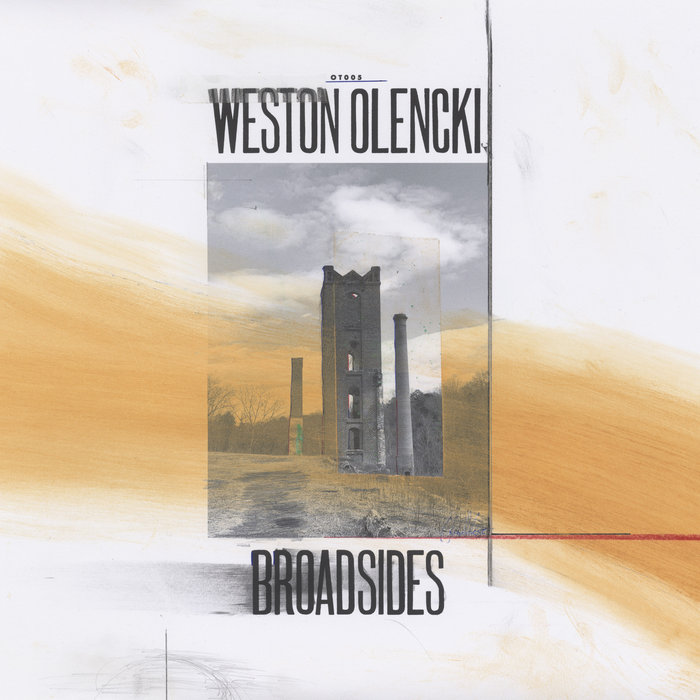
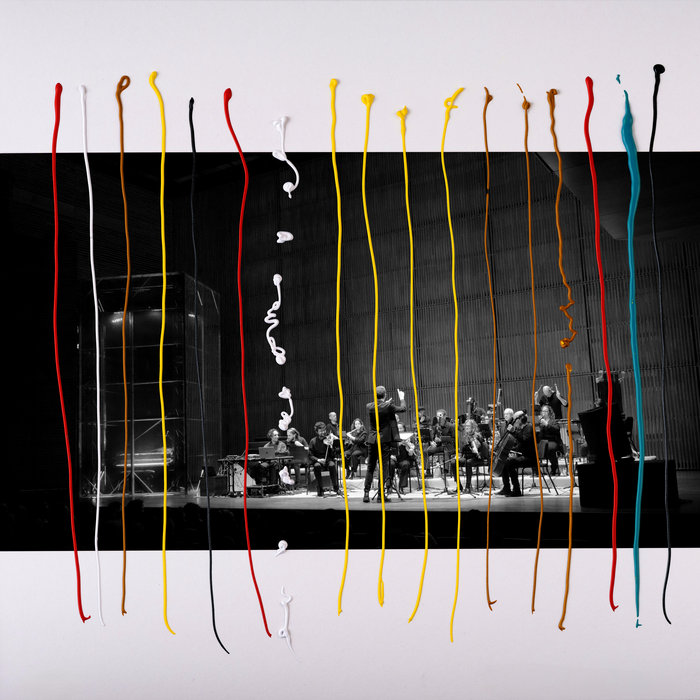
The premise is funny and exact: Steve Reich’s Four Organs crossed with Louie Louie. A thirteen-piece band turns Orcutt’s software-generated structure into loud, unstable ensemble music, where strict timing keeps threatening to come apart.
How the machine enters
Orcutt designed the open-source Cracked software that generated the structure of The Four Louies by combining material from Steve Reich's Four Organs with Louie Louie. This live recording realizes that computer-built composition through a thirteen-piece ensemble recorded at Roulette in Brooklyn; no machine-learning claim is made.
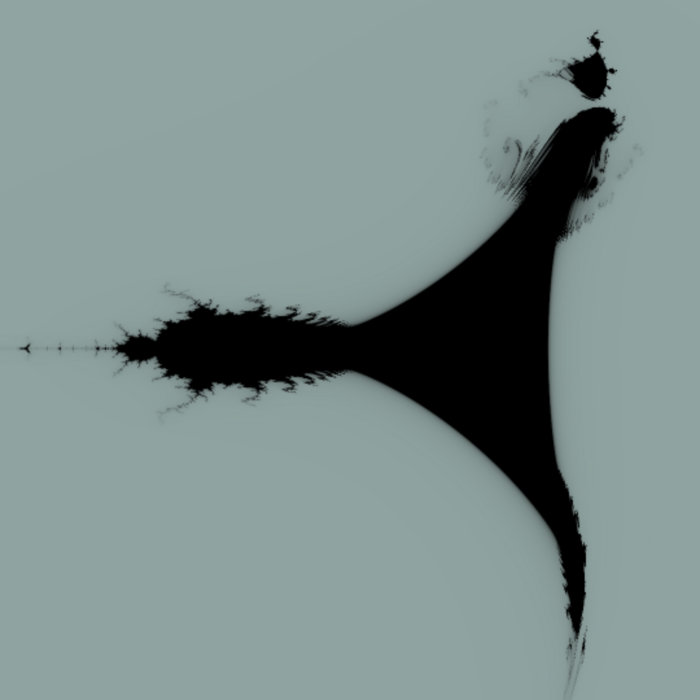
Two long sides of slow-motion instability. Tones gather, thin and drift without settling into a loop, while tiny changes in pressure make the custom instrument feel less like a machine demonstrating chaos than a landscape being patiently played.
How the machine enters
Heel combines a self-built Eurorack instrument with custom software whose modulation is derived from chaotic attractors. The system produces structured, continuously varying behaviour without loops; Heel shapes its output through composition, intuition and performance. No machine-learning claim is made.
Hundreds of tape fragments become an album with warmth, swing and abrasion rather than nostalgia. Chance throws rhythmic and harmonic material together; Brett Bullion's ear turns those collisions into eight pieces that feel loose-limbed but decisively cut.
How the machine enters
Bullion recorded and hand-spliced hundreds of analogue tape loops containing rhythmic, harmonic and textural fragments, then used a chance procedure to select combinations. He transformed the results through speed changes, filtering and studio arrangement, making the random-selection rule materially formative while retaining human authorship. No machine-learning claim is made.
Max Eilbacher & Lucy RailtoniDEAL Recordings · 15 Sep 2026
Algorithmic compositionNo AI / ML claimed
Indifferent Rocks Are Rearranged into a Dam
Cello and synthesis meet as materials rather than opposites. A single long piece moves through bright partials, unstable beating and hard-edged electronic mass, turning spectral analysis into music with real physical tension.
How the machine enters
Railton's cello spectra were analysed and digitally resynthesized as collections of partials. Eilbacher and Railton calculated the distances between those frequencies to construct the harmonic system, then arranged simplified synthetic tones against the performed cello. The artists designed the analysis, synthesis and form; no machine-learning claim is made.
Early trance and a Catholic pipe organ turn out to share more than repetition. Denuc uses a custom sequencer to make the organ move at inhuman speed, then lets the church’s acoustics give those patterns weight and duration.
How the machine enters
Denuc composed and programmed the album for a MIDI-controlled pipe organ. His hand-built Max/MSP sequencer and OpenSoundControl system address the instrument's keyboards, stops and pedals, producing rapid repetitions and other passages beyond human performance while Denuc shapes, records and edits the result. No machine-learning claim is made.
Mark FellNational Centre For Mark Fell Studies · 11 Sep 2026
Algorithmic compositionNo AI / ML claimed
Servitude In Context EP
Forty minutes of dance music that keeps changing the floor beneath itself. Clashing tempi, snapped digital percussion and strange accelerations make Fell's formal systems feel less like abstraction than a new physics for bodies.
How the machine enters
Boomkat documents poly-temporal permutations, asymmetrical rhythmelodic arrangements and Fell's long-held ideas of multi-stability. Patterns appear to adapt against one another in real time, while acceleration, deceleration, attack and decay become compositional variables. Fell authors and controls the system; no machine-learning claim is made.
Three hours of pastoral drift generated by an unusually poetic control system. Text becomes Morse-code gates, lunar phases disturb their timing, and three resonator chords open into shortwave haze: ambient music whose apparent stillness is full of machinery.
How the machine enters
Brian Grainger recorded the piece on his portable Audioholistics modular system. A module translates a section of Homer's Odyssey into twice-daily Morse-code gate patterns; a second module subdivides those gates differently each day according to lunar phases. Shortwave radio passes through feed-forward delay and distance-based filtering. Grainger chose and patched the system and recorded its evolving output; no machine-learning claim is made.
A three-minute club track with a vocal hook, quick-building tension and no wasted motion. The code is audible in its clipped repetitions and abrupt turns, but the decisions are those of a sharp pop songwriter.
How the machine enters
DJ_Dave's first-party performance post identifies Await as music coded in Strudel. Her August SoundCloud interview describes Strudel and Sonic Pi as instruments for triggering samples and synthesis parameters, including randomized vocal chops and arpeggios. No machine-learning claim is made.
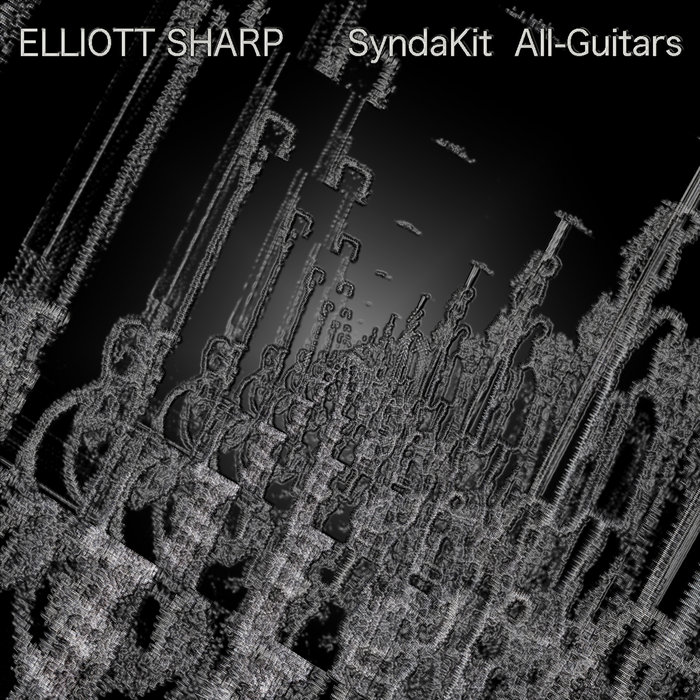
Ten electric guitars behave like a flock with faulty instincts: copying, mutating and recombining until the score becomes a weather system. Nearly two decades in the vault have not cooled its feral group intelligence.
How the machine enters
Sharp's 144 composed cores are distributed across twelve score sheets, then activated through rules for imitation, addition, recombination, transposition and mutation. The system models flocking birds, cellular automata, hunting packs and recombinant amino acids; this 2026 release documents a 2008 performance. No machine-learning claim is made.
Eight pieces of intricate software music where glassy melody, broken rhythm and microscopic debris keep swapping foreground. The code never arrives wearing a lab coat; it behaves like an instrument with private muscle memory.
How the machine enters
EVEL ties each piece to processes developed inside Michael Cella's own creative environment. Artist-authored compositional systems organise structure, texture and evolution, with software design and musical creation treated as one practice. No machine-learning claim is made.
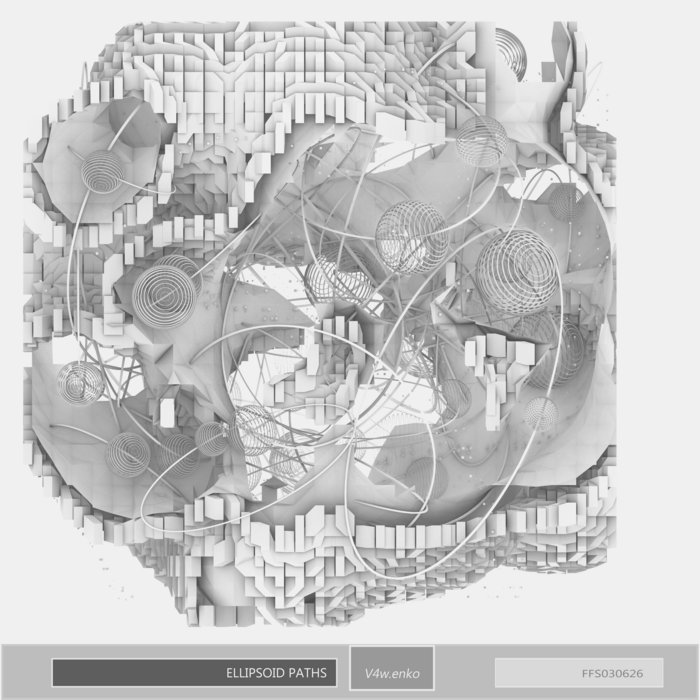
A lean, two-part study in sequence and surface. Twelve minutes is enough for clipped pulses, sustained tones and rough-edged digital movement to keep changing their relationship without losing the thread.
How the machine enters
Both tracks were recorded in real time while v4w.enko configured a generative sequencer programmed in Max/MSP 4.5.7. The artist builds procedural instruments in Max/MSP and Jitter, placing the authorship in the design and live handling of the system. No machine-learning claim is made.
Acoustic performances are taken apart without losing their grain. Soft drums, guitar, brass and mallets keep surfacing inside slow-moving polyrhythms: patient headphone music with real warmth and rhythmic life.
How the machine enters
Every source sound is an acoustic performance recorded by the duo or their collaborators. The label documents custom-built software processing, while Adam Parkinson describes a Max/MSP patch he jams with as a musical instrument; Jordan Cohen then cuts and resamples the material into paired pieces and shifting rhythmic patterns. No machine-learning claim is made.
A ten-track rhythm study that keeps changing the grid without losing the body. Polymeters slide across one another, subdivisions breathe and trance patterns mutate in place: intricate electronic music with forward motion rather than technical display.
How the machine enters
Swaroop Guhathakurta translates layered, interlocking drumming principles into generative electronic structures built from shifting time signatures, polymetric and polyrhythmic relationships, evolving subdivisions and interdependent patterns. Those structures create continuous variation instead of fixed repetition; Guhathakurta wrote, produced, composed and mastered every track. No machine-learning claim is made.
Two long real-time documents with the casing left open. One catches Whitman’s computer music in public motion; the other lets hybrid digital-analogue patterns spread across the room after hours. Process music as lived-in voltage, not white-coat proof.
How the machine enters
The release joins a live performance identified by Whitman as Computer Music with a later set of hybrid digital-analogue synthesizer patterns. His official site describes the surrounding practice as improvised live electronics captured in real time and research into generative and process systems across analogue and digital domains; no machine-learning claim is made.
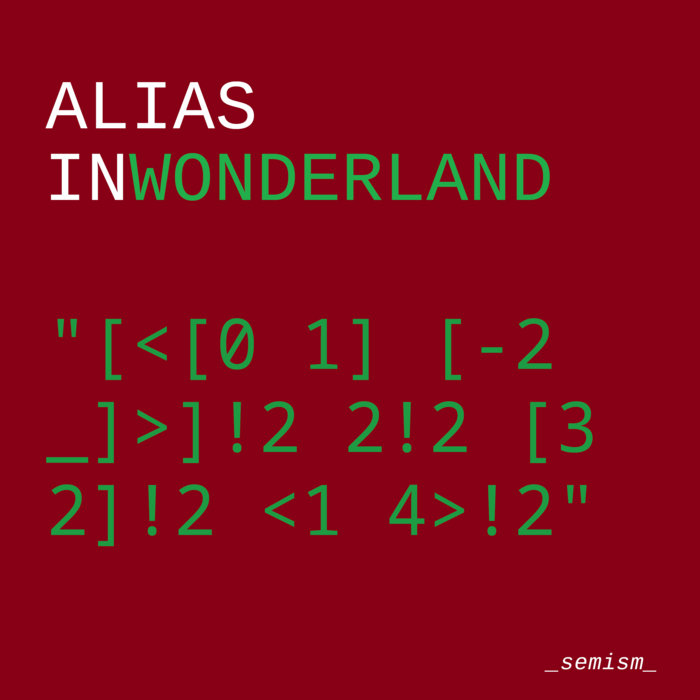
Three compact transmissions from a laptop rabbit hole: clipped percussion, synthetic pressure and sudden negative space assembled while the code is still warm. It behaves like techno that has learned to edit its own nervous system in public.
How the machine enters
Stotrojka identifies _semism_ as Semi Ismaili's live-coding project and ties this debut EP to software, sound and real-time processes used to build continually shifting electronic environments. All music is produced by Ismaili; no machine-learning claim is made.
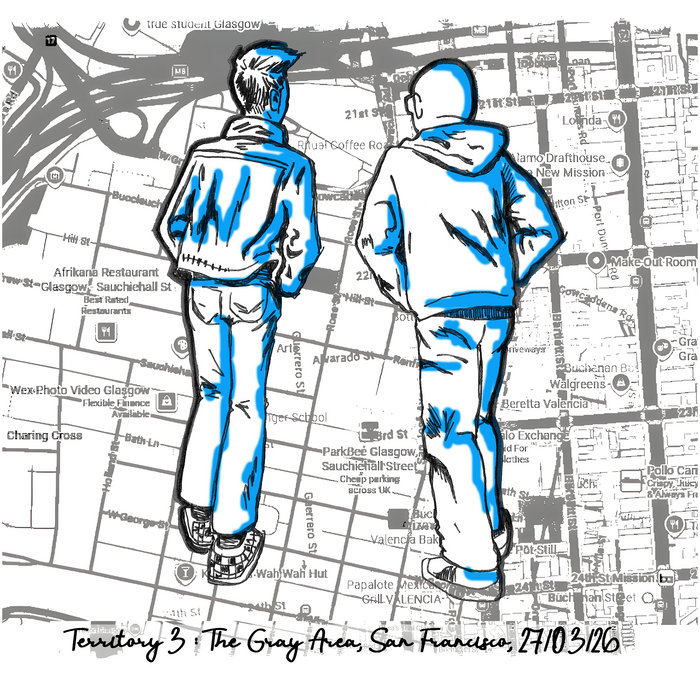
Two walks become a duet across distance. Field recordings and recollected voices give Law's turntable performance an intimate, restless form: places are revisited, interrupted and brought into contact, with the accompanying walks opening the source material to a second hearing.
How the machine enters
Law's Territory interface maps recorded walks, photographs and oral recollection to the position of a turntable needle. Needle movement, direction and vinyl manipulation reshape the walks in real time. This release documents his March 2026 Algorithmic Art Assembly talk and performance, alongside the San Francisco and Glasgow walks. Law authored and performs the system; no machine-learning claim is made.
Six compact pieces move between ambient drift, clipped rhythm and indie-electronic melody without treating the code as a spectacle. Gold Kim’s programming feels closer to touch than demonstration: structures change in the moment, but the record keeps a warm, handmade scale.
How the machine enters
The release was composed and recorded through live-coding performance, with Gold Kim writing and modifying code in real time. Kim programmed the drums, bass, synthesisers, keyboards and effects, then handled composition, sound design and the album's direction. The code is the instrument and Kim remains the author and performer; no machine-learning claim is made.
Fourteen research careers recast as bright, patiently unfolding electronics. Citation counts become pulse and pitch; Karhide then trims the spreadsheet chill with grain, drift and enough melodic sentiment to keep the graphs breathing.
How the machine enters
Sonimet maps each researcher's publication timeline, career milestones and citation density into MIDI velocity, pitch and rhythm. Karhide imports those generated parts into Ableton Live, then arranges and reshapes them with Synplant, Microtonic and effects. The release documents data sonification and substantial human production, but makes no machine-learning claim.
José Ignacio Quevedo GómezSelf-released · 27 Aug 2026
Algorithmic compositionNo AI / ML claimed
Dedicated to the Iguana. // SuperCollider Composer.
Thirty-three pieces form a sprawling atlas of computer composition: brittle pulses, skewed counterpoint, low drones and quick synthetic studies. Its scale is unruly, but the changes of method keep it closer to a sketchbook than a software dump.
How the machine enters
Quevedo Gómez links the pieces to SuperCollider and SCAMP-Python systems using stochastic processes, chaotic models and algebraic or mathematical procedures. He authored the programs and compositions across the collection; no machine-learning claim is made.
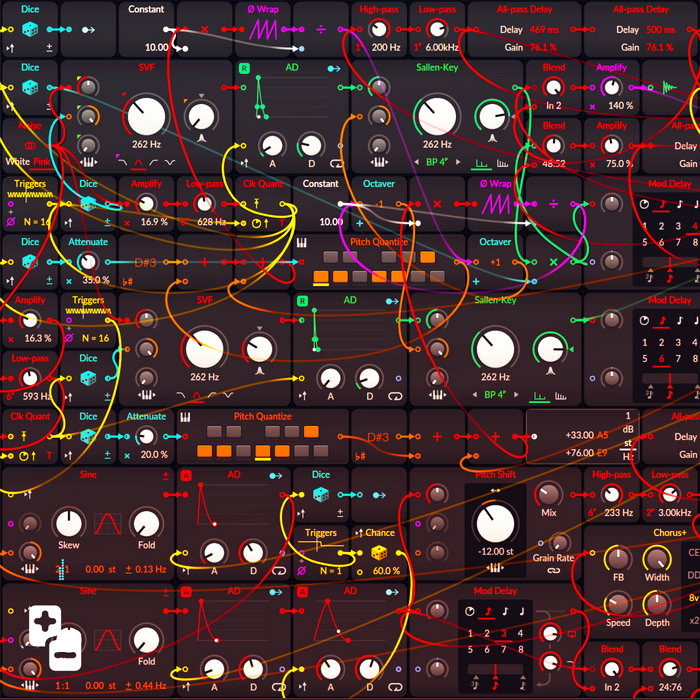
Four ten-minute drones from one Bitwig Grid organism: less ambient wallpaper than a controlled weather front. The edits slow, darken and roughen the same orbit until repetition starts behaving like depth.
How the machine enters
Polarity built the release from a single generative Bitwig Grid patch. The official release notes identify four versions of that patch and link both the original performance and the downloadable preset, making the system behind the music inspectable rather than merely claimed.
Eight long polyrhythmic chambers built from raw synthesis, harmonic pressure and the kind of digital repetition that keeps finding trapdoors. Severe enough for the lab, physical enough for the room.
How the machine enters
The release page describes generative, procedural sound lines, constant rhythms and polyrhythmic structures stitched into finished compositions. v4w.enko identifies the underlying practice as real-time algorithmic music made with self-programmed Max/MSP/Jitter instruments; no machine-learning claim is made.
Eight electroacoustic problems with no interest in resolving politely. Noise, concrète debris and unstable pulse keep changing the terms of engagement; the algorithms supply pressure, not personality.
How the machine enters
Najafi builds each piece around a different algorithmic or generative system, moving between computer music and electroacoustic experiment. EVEL ties those systems directly to the album rather than merely describing the artist's wider practice.
Seven compact shocks written in the browser, where rhythm behaves like syntax under pressure. This is live coding with the screen glare left in: brusque, unstable and far too physical to feel like a demonstration.
How the machine enters
c_robo_ works in Strudel, the browser-based implementation of TidalCycles. The label ties this release specifically to live coding and algorithmic composition: patterns are written and transformed as code, while the artist's timing and structural decisions shape the finished record.
A compact TidalCycles session that values momentum over exposition. The main take and two earlier passes keep the same material unsettled, letting clipped rhythm, repetition and small mutations do the structural work.
How the machine enters
th4 identifies Strand as a TidalCycles improvisation recorded in August 2026, with two earlier takes included as bonus tracks. The code is used as a live performance environment for shaping patterns and variation; no machine-learning claim is made.
Sol LeWitt’s grid is shoved through a speedcore lathe until concept, kick drum and counting error become indistinguishable. Four blunt proofs that informational music can still leave bruises.
How the machine enters
Code translates the lines and spaces in Sol LeWitt’s 1970 drawing Six Thousand Two Hundred And Fifty-Five Lines into 6,255 speedcore kicks, rendered at 33 and 45 RPM; two versions add 6,255 Hz drones. The rule is the score, and the release is its deliberately excessive execution.
Four slow forests grown while nobody was watching. Analogue tones coil, flower and lose their edges across seventy-seven minutes; less a set of ambient tracks than a weather system caught deciding what shape to take.
How the machine enters
Riedl assembled the album from days-long generative sessions recorded between October 2025 and January 2026. He set analogue synthesis and drifting effects in motion, left the machines running unattended, then returned periodically to add textures or adjust settings; the released pieces are edited excerpts from those evolving systems.
Five minutes of data made physical. Ventimiglia treats digital structures as raw sonic matter, listening for the configurations the system produces and choosing where observation becomes composition.
How the machine enters
Ventimiglia converts digital data directly into audio without a conventional sound source. Different data structures produce a catalogue of system outputs; the artist observes and selects the resulting sonic configurations rather than composing noise conventionally. No machine-learning claim is made.
A box of VCV Rack mechanisms taught to twitch, disperse and occasionally eat their own wiring. Tiny rhythmic particles become a loose, quick-witted electronic ecosystem rather than a preset parade.
How the machine enters
Each piece uses a different VCV Rack patch built mainly from Audible Instruments ports of Mutable Instruments modules. Stochastic trigger trains, split modulation streams, feedback networks, cross-patched sequencers and real-time muting turn each system into an instrument for improvisation.
Three records, three different relationships between an artist and a system. These are entry points, not rankings.
Maria Arnal · AMA · Neural audio
A voice meets its possible selves
Arnal built AMA from vocal improvisations, adding words later, and developed models of her own voice with the Barcelona Supercomputing Center. The technology lets one singer become a choir of related but unfamiliar selves. What gives the record its force is the human material around that system: breath, memory, grief and Arnal’s decisions about which synthetic voices belong beside her physical one.
Maxime Denuc · Club Imperiale · Algorithmic composition
The organ after midnight
Early trance and a Catholic pipe organ turn out to share more than repetition. Denuc’s hand-built Max/MSP sequencer controls the organ’s keyboards, stops and pedals, producing passages no organist could physically play. After a year working with the instrument at Sankt Antonius in Düsseldorf, he made music in which rapid patterns gain weight from air, wood and the long acoustics of the church.
Bill Orcutt · Four Louies Live · Algorithmic composition
A system handed to a band
Orcutt’s open-source Cracked software combined the structure of Steve Reich’s Four Organs with material from “Louie Louie”. For this recording, the computer-built piece is transcribed for thirteen players. The joke survives, but so does the friction: a rigid framework becomes loud, unstable ensemble music once human timing and touch enter the room.
Performances, installations and research works live here. They matter—but they are not passed off as commercially released tracks.
F/01
Research performance · 3 Oct 2026
A Human-AI Musical Dialogue
Jordan Rudess + jam_bot
A music transformer trained on Rudess's own performances listens and answers him in real time, while generating material for the MIT Chamber Chorus. The machine predicts; Rudess steers, restarts and decides.
Eight EEG bands steer synthesis, spatialisation and algorithmic transformations inside a pre-composed spectral frame: thought as control voltage, not mysticism.
Wired Moth is interested in what happens when musicians give technology a meaningful part in the creative process — and something human comes back out.
Code can write rules. Software can generate possibilities. Models can learn. Systems can behave unpredictably. But the records we care about still carry the fingerprints of the people making them: judgement, obsession, humour, mistakes, emotion and taste.
Sometimes the machine is almost another performer. Sometimes it is an instrument the artist has built. Sometimes it is simply a system capable of taking the music somewhere its creator couldn’t have reached alone.
Not everything here is warm or obviously human. Some of it is deliberately synthetic, mechanical or strange. We will make room for that too when the idea or the artist is compelling. But technology alone isn’t enough.
The music has to have a soul.
Wired Moth works the same way. Machines help us search, research, verify and discover. Human ears make the final decision.